A review of The TVR Sports Car, covering development, important features, and technical data of each model in the range, from the Grantura to the Chimaera.
In this Article, I offer a nostalgic look at The TVR Sports Car, one of an elite group of classic cars, which was manufactured during the period 1958 to 1992+.
TVR was established in 1947 by Trevor Wilkinson.
In 1956, TVR started producing its own glass reinforced plastic (GRP) body shells, as well as the chassis. Within two years, the ground-breaking design of the Grantura was born.
The TVR Grantura
The TVR Grantura Series 1 was launched in 1958. It used a GRP body moulded to a steel chassis, with a 1.1 litre Coventry Climax engine.
Launched in 1960, the Series 2 offered different engines, including that from the MGA, and incorporated rack and pinion steering.
The Series 3, introduced in 1963, used either a 1.6 litre or a 1.8 litre MG engine. The Grantura was succeeded by the Vixen.
The TVR Griffith 200
In 1963, the TVR Griffith 200 sports car was introduced. It was, essentially, a TVR Grantura Series 3 in which the 1.8 litre MGB engine was replaced with a 4.7 litre Ford V8, the same unit as in the AC Cobra.
Demand for this rival to the Cobra was such that TVR was inundated with orders.
The TVR Griffith 400
In 1964, the TVR Griffith 200 was replaced by the TVR Griffith 400 sports car. Like its predecessor, it was a two seater coupe. It used the same engine, but had a higher top speed due to its increased gear ratio.
As a result of a prolonged dock strike in the US, by 1967, only 59 Griffith 400 and 10 Griffith 600, with the newer body design, were built.
The TVR Tuscan
The TVR Tuscan sports car, introduced in 1967, was a two seater, fixed head coupe.
The V8 version used the same 4.7 litre Ford V8 engine as in the Ford Mustang.
By 1970, since only 72 Tuscan V8's were built, it was superseded by the Tuscan V6 sports car, which used a 3 litre, Ford V6 engine. When production ended in 1971, it was succeeded by the TVR Vixen.
Developed from the TVR Grantura, the TVR Vixen was introduced in 1967. It used a 1.6 litre, 4-cylinder Ford engine. The fibre glass body was built onto a tubular frame.
The TVR M Series
Replacing the TVR Vixen And TVR Tuscan models, the TVR M Series sports cars was launched in 1972. They used a glass reinforced plastic body on a metal frame construction. The Series included the 1600M, 2500M,
3000M, 3000S and 3000M Turbo.
In 1974, the Triumph 2.5 litre engine in the TVR 2500M was replaced by a 4.7 litre, Ford V8 engine as used in the TVR Griffith 200.
Hence was born the TVR 5000M. Only a handful were ever built owing to a fire at the TVR factory in 1975.
The TVR Tasmin
In 1980, the TVR Tasmin, a.k.a. TVR 280i, was introduced. It was wedge-shaped, and available as a two seater convertible, as well as a two seater and 2+2 fixed head coupe.
The Tasmin 280i used a 2.8 litre, Ford V6 engine, whilst its cheaper counterpart, the Tasmin 200, used a 2 litre, 4-cylinder Ford unit.
The Tasmin's wedge-shape was not well received, and sales were poor.
Based on the Tasmin 280i, the Tasmin 350i sports car appeared in 1983. Variants of the 350i included:
the 3.9 litre 390i
the 4.0 litre 400SE
and the ferocious 4.5 litre, 320 bhp 450SE
The TVR S Series
In 1987, TVR introduced the S Series. This saw a move away from the wedge-shape to the traditional TVR styling incorporating curves.
The V6 S Series used a Ford V6 engine, whilst the V8 S Series used a modified 4 litre, fuel injected Rover V8 unit.
The TVR 2 litre V8 S Series was a supercharged version of the V8 S. It used a modified 3.5 litre Rover V8 engine, with a reduced displacement of 1998 cc, combined with fuel injection and a supercharger. They were two
seater convertibles.
The TVR Griffith 500
In 1992, the V8 S Series was withdrawn, and was replaced by the TVR Griffith 500 sports car.
Like the Griffith 200 and 400 of the 60's, it was a lightweight, fibre glass bodied, two seater. Initially, it used the modified 4 litre, Rover V8 engine whose capacity could be easily increased.
All used a five speed manual transmission. Interior design was of a high standard. Production ended in 2002.
The TVR Chimaera
Also in 1992, the TVR Chimaera sports car was introduced. It was a two seater convertible and, like the Griffith, made use of the same array of Rover V8 engines.
It was designed for long distance motoring, and was therefore more spacious, internally, and its suspension was less firm than that of the Griffith.
The engine spec was as per the Griffith, although there were minor improvements in top speed.
This marked the end of the classic TVR sports car
Beyond 2000, TVR produced a number of exciting sports cars which, sadly, falls beyond the time frame of this review.
Perhaps this stroll down memory lane might have answered, or at least shed light on, a possible question:
"Which TVR Sports Car Is Your Favourite?"
However, should this question still remain unanswered, I will be reviewing, in some detail, in future articles within this website, the entire range of TVR sports cars which were featured in the memorable era spanning 1958 to
1992.
I hope you join me in my nostalgic travels "down sports car memory lane".
If you would care to view my Original article, containing Photographs, Videos, Technical Data, and Charts not shown in this Article, then please click the following link:
http://www.sportscar2.com/sports-car-tvr.html
Article Source: http://EzineArticles.com/?expert=Peter_Radford
Thursday, June 26, 2014
Wednesday, June 25, 2014
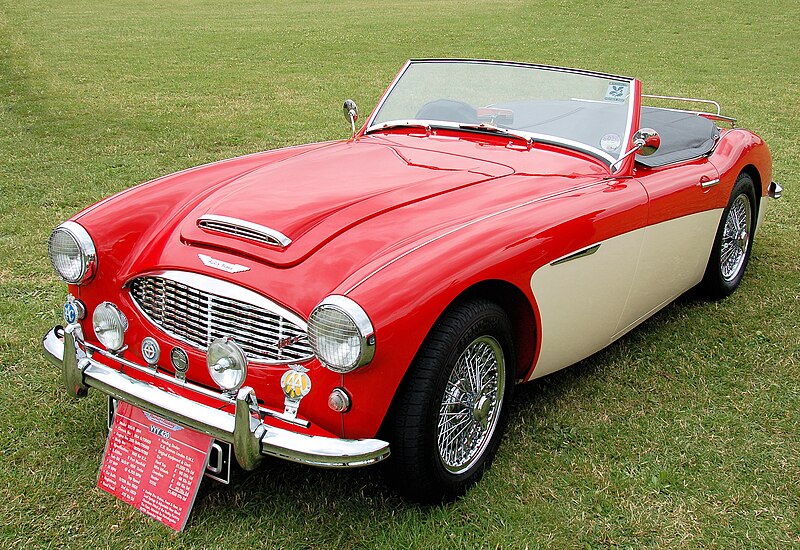
Austin-Healey 100/6 BN4 Sports Car
A review of The Austin-Healey 100/6 BN4 Sports Car, covering development, important features, and technical data of this the first model in the range.
In this Article, I offer a nostalgic look at the Austin-Healey 100/6 BN4, one of an elite group of classic cars, which was manufactured during the period 1956 to 1959.
The Record Breaking Cars
The Streamliner
In 1956, two sports cars were taken to the Bonneville Salt Flats in Utah as part of Donald Healey's dream of travelling at more than two hundred mph.
The first car was based on a 1954 Austin-Healey BN1, powered by a supercharged, 2639 cc, BMC C-Series, 6-cylinder engine with a four speed gearbox.
Owing to its shape, it was known as the "Streamliner". In fact, this engine, in its standard form, would power the forthcoming Austin-Healey 100/6 sports car.
The supercharged engine was modified by Austin until it had developed 292 bhp at 5000 revs. At this point, they were confident that the car was capable of reaching 217 mph.
One weakness of the car was its bevel rear axle which, owing to the extreme power generated, could fail if the car accelerated too fast.
Before being dispatched to America, the car received extensive aerodynamic testing in a wind tunnel. As a result, it was agreed to remove the car's 1954 rear fin in order to improve stability.
On 9th August 1956, during the first test run, as the car reached 200 mph, the supercharger failed amidst a huge explosion.
After receiveing replacement parts from England, the car was repaired at a local service station.
On 21st August, Donald Healey set off on the first of two compulsory runs, one in each direction.
During the first run, he achieved 204 mph before the supercharger, once again, blew up.
After quick repairs, he reached 197 mph on the second run which gave him an average speed of 201.1 mph. He had achieved his dream of reaching 200 mph.
The Endurance Car
The second car taken to Bonneville in 1956 was known as the Endurance Car, and was an Austin-Healey BN2 sports car fitted with a long nose.
It used a standard 2639 cc engine with a six port head, three twin choke Webber carburettors, a compression ratio of 10:1, and developed 160 bhp.
However, further development on it raised the output to 164 bhp at 5500 rpm when running on a mixture of equal proportions of methanol, benzole, and premium grade petrol.
On 9th August 1956, when engine testing began, problems with vapour lock caused the trials to stop.
On 14th August, further problems with misfiring were encountered.
Subsequently, with problems resolved, the engine was fitted into the body, built by carmakers Jensen, with the cockpit adapted to resemble a single seat racer.
Carroll Shelby and Roy Jackson-Moore, between them, broke the 150 mph barrier with the Endurance car.
The two record breaking attempts were conducted to coincide with the launch of the new Austin-Healey 100/6 sports car in September 1956.
The Endurance car was painted in the two tone colour scheme of Healey Blue and White, and sported an oval grille with wavy horizontal bars that were to be incorporated in the forthcoming launch.
The 100/6 BN4
The 92 bhp generated by the basic C-Series engine was regarded as insufficient to power the new 100/6 especially since its predecessor, the 100/4, produced 90bhp, and was some 330 pounds lighter.
Consequently, as a result of further work on the engine, output was increased to 102 bhp at 4600 revs.
This initial version of the 100/6 BN4 sports car had only two inlet ports which, combined with horizontal 1.5 inch H4 SU carburettors, made for difficult engine breathing.
Although 0-60 mph time was less than that of the 100/4, the new car had a much smoother engine, with good mid range torque, which made for effortless long distance high speed driving.
In late 1957, the BN4 received a new cylinder head with a six port aluminium inlet manifold, and two larger 1.75 inch HD6 SU carburettors.
Together with larger valves and a compression ratio raised to 8.7:1, the engine now developed 117 bhp at 4700 rpm, with an improvement in both acceleration and top speed.
This six port head was the result of the 1956 record breaking cars.
In 1956, the 100/4 BN2 sports car was phased out just as BMC was in the process of rationalising its range of engines as follows: A-Series being 850 cc, B-Series being 1500 cc, and C-Series being 2600 cc.
Since the Austin A90 and Wolseley 6/90 saloon cars were currently using a C-Series, 6-cylinder engine of 2639 cc displacement, it was suggested that this unit could replace the existing 2660 cc, 4-cylinder unit used in the
BN2.
100/6 BN4 Specification:
2639 cc, 6-cylinder, overhead valve engine
A two port cylinder head initially, later replaced by a six port
Two HD6 SU carburetttors
Four speed gearbox with overdrive on the top two gears
Independent front suspension with a live axle at the rear
Hydraulic drum brakes all round
Windscreen was now fixed and could no longer be folded down
Two occasional rear seats (2+2 version) until early 1958
Since the new 6-cylinder engine was larger than its replacement, a bonnet scoop was added in order that the radiator, which had now been moved forward, was clear of the bonnet.
Furthermore, in order to extend the appeal of the car, Donald Healey added two occasional rear seats. As a result, it was necessary to increase the length of the chassis by two inches.
The 2+2 version was discontinued in early 1958, and was only offered as an optional extra, since the two seater version became the more desirable.
Apart from 284 units built with right hand drive for the home market, all 100/6 production was exported to the US.
In the latter part of 1957, the manufacture of the BN4 moved from the Longbridge factory to the MG facility at Abingdon.
Production of the BN4 ended in 1958, when it was replaced by the two seater, 100/6 BN6 variant.
This marked the end of the Austin-Healey 100/6 BN4
Perhaps this stroll down memory lane might have answered, or at least shed light on, a possible question:
Which Austin-Healey Sports Car is Your Favourite?
However, should this question still remain unanswered, I will be reviewing, in some detail, in future articles within this website, the entire range of Austin-Healey sports cars which were featured in the memorable era spanning
1953 to 1972.
I hope you join me in my nostalgic travels "down sports car memory lane".
If you would care to view my Original article, containing Photographs, Videos, Technical Data, and Charts not shown in this Article, then please click the following link:
http://www.sportscar2.com/sports-car-austin-healey-100-6-bn-4.html
Alternatively, please view my website on:
http://www.sportscar2.com/
Article Source: http://EzineArticles.com/?expert=Peter_Radford
In this Article, I offer a nostalgic look at the Austin-Healey 100/6 BN4, one of an elite group of classic cars, which was manufactured during the period 1956 to 1959.
The Record Breaking Cars
The Streamliner
In 1956, two sports cars were taken to the Bonneville Salt Flats in Utah as part of Donald Healey's dream of travelling at more than two hundred mph.
The first car was based on a 1954 Austin-Healey BN1, powered by a supercharged, 2639 cc, BMC C-Series, 6-cylinder engine with a four speed gearbox.
Owing to its shape, it was known as the "Streamliner". In fact, this engine, in its standard form, would power the forthcoming Austin-Healey 100/6 sports car.
The supercharged engine was modified by Austin until it had developed 292 bhp at 5000 revs. At this point, they were confident that the car was capable of reaching 217 mph.
One weakness of the car was its bevel rear axle which, owing to the extreme power generated, could fail if the car accelerated too fast.
Before being dispatched to America, the car received extensive aerodynamic testing in a wind tunnel. As a result, it was agreed to remove the car's 1954 rear fin in order to improve stability.
On 9th August 1956, during the first test run, as the car reached 200 mph, the supercharger failed amidst a huge explosion.
After receiveing replacement parts from England, the car was repaired at a local service station.
On 21st August, Donald Healey set off on the first of two compulsory runs, one in each direction.
During the first run, he achieved 204 mph before the supercharger, once again, blew up.
After quick repairs, he reached 197 mph on the second run which gave him an average speed of 201.1 mph. He had achieved his dream of reaching 200 mph.
The Endurance Car
The second car taken to Bonneville in 1956 was known as the Endurance Car, and was an Austin-Healey BN2 sports car fitted with a long nose.
It used a standard 2639 cc engine with a six port head, three twin choke Webber carburettors, a compression ratio of 10:1, and developed 160 bhp.
However, further development on it raised the output to 164 bhp at 5500 rpm when running on a mixture of equal proportions of methanol, benzole, and premium grade petrol.
On 9th August 1956, when engine testing began, problems with vapour lock caused the trials to stop.
On 14th August, further problems with misfiring were encountered.
Subsequently, with problems resolved, the engine was fitted into the body, built by carmakers Jensen, with the cockpit adapted to resemble a single seat racer.
Carroll Shelby and Roy Jackson-Moore, between them, broke the 150 mph barrier with the Endurance car.
The two record breaking attempts were conducted to coincide with the launch of the new Austin-Healey 100/6 sports car in September 1956.
The Endurance car was painted in the two tone colour scheme of Healey Blue and White, and sported an oval grille with wavy horizontal bars that were to be incorporated in the forthcoming launch.
The 100/6 BN4
The 92 bhp generated by the basic C-Series engine was regarded as insufficient to power the new 100/6 especially since its predecessor, the 100/4, produced 90bhp, and was some 330 pounds lighter.
Consequently, as a result of further work on the engine, output was increased to 102 bhp at 4600 revs.
This initial version of the 100/6 BN4 sports car had only two inlet ports which, combined with horizontal 1.5 inch H4 SU carburettors, made for difficult engine breathing.
Although 0-60 mph time was less than that of the 100/4, the new car had a much smoother engine, with good mid range torque, which made for effortless long distance high speed driving.
In late 1957, the BN4 received a new cylinder head with a six port aluminium inlet manifold, and two larger 1.75 inch HD6 SU carburettors.
Together with larger valves and a compression ratio raised to 8.7:1, the engine now developed 117 bhp at 4700 rpm, with an improvement in both acceleration and top speed.
This six port head was the result of the 1956 record breaking cars.
In 1956, the 100/4 BN2 sports car was phased out just as BMC was in the process of rationalising its range of engines as follows: A-Series being 850 cc, B-Series being 1500 cc, and C-Series being 2600 cc.
Since the Austin A90 and Wolseley 6/90 saloon cars were currently using a C-Series, 6-cylinder engine of 2639 cc displacement, it was suggested that this unit could replace the existing 2660 cc, 4-cylinder unit used in the
BN2.
100/6 BN4 Specification:
2639 cc, 6-cylinder, overhead valve engine
A two port cylinder head initially, later replaced by a six port
Two HD6 SU carburetttors
Four speed gearbox with overdrive on the top two gears
Independent front suspension with a live axle at the rear
Hydraulic drum brakes all round
Windscreen was now fixed and could no longer be folded down
Two occasional rear seats (2+2 version) until early 1958
Since the new 6-cylinder engine was larger than its replacement, a bonnet scoop was added in order that the radiator, which had now been moved forward, was clear of the bonnet.
Furthermore, in order to extend the appeal of the car, Donald Healey added two occasional rear seats. As a result, it was necessary to increase the length of the chassis by two inches.
The 2+2 version was discontinued in early 1958, and was only offered as an optional extra, since the two seater version became the more desirable.
Apart from 284 units built with right hand drive for the home market, all 100/6 production was exported to the US.
In the latter part of 1957, the manufacture of the BN4 moved from the Longbridge factory to the MG facility at Abingdon.
Production of the BN4 ended in 1958, when it was replaced by the two seater, 100/6 BN6 variant.
This marked the end of the Austin-Healey 100/6 BN4
Perhaps this stroll down memory lane might have answered, or at least shed light on, a possible question:
Which Austin-Healey Sports Car is Your Favourite?
However, should this question still remain unanswered, I will be reviewing, in some detail, in future articles within this website, the entire range of Austin-Healey sports cars which were featured in the memorable era spanning
1953 to 1972.
I hope you join me in my nostalgic travels "down sports car memory lane".
If you would care to view my Original article, containing Photographs, Videos, Technical Data, and Charts not shown in this Article, then please click the following link:
http://www.sportscar2.com/sports-car-austin-healey-100-6-bn-4.html
Alternatively, please view my website on:
http://www.sportscar2.com/
Article Source: http://EzineArticles.com/?expert=Peter_Radford
Tuesday, June 24, 2014
The Marcos Sports Car
A review of The Marcos Sports Car, covering development, important features, and technical data of each model in the range, from the GT1800 to the Mantaray.
In this Article, I offer a nostalgic look at the Marcos Sports Car, one of an elite group of classic cars, which was manufactured during the period 1964 to 1998.
Marcos was founded in North Wales in 1959.
The first sports car, called the Xylon, had gullwing doors, a high roof, and a split windscreen.
It was given the nickname "Ugly Duckling", and was powered by Ford 1 litre and 1.2 litre engines.
Targeted at competition events, only nine were built between 1959 and 1960. Production models were built up to 1963.
It achieved racing success when driven by Jackie Stewart, and others.
In 1961, there were design changes to the original car, making it sleeker and more attractive.
The plywood chassis and gullwing doors were kept, and the car was now renamed the Marcos Luton Gullwing sports car.
A total of thirteen were built. It was mostly used for racing.
A convertible version, known as the Spyder, was launched with the gullwing doors removed.
The Marcos GT 1800
In 1964, the Marcos GT 1800 sports car made its debut at the London Racing Car Show.
Presented as a road car, it was well received. It retained a wooden chassis, which was encased in a glass fibre shell.
It originally used a 1.8 litre, 4-cylinder, Volvo engine. However, in 1966, this was replaced by a range of Ford engines, from 1.5 to 1.65 litres. Finally, in 1969, a Ford V4 unit was used.
In 1969, the plywood chassis was replaced with one made of steel.
This allowed more powerful engines to be used, such as the 3 litre, Ford V6, or the 3 litre, Volvo straight 6-cylinder.
Cars exported to the US used the Volvo engine to cover exhaust emission regulations.
The Mini Marcos
In 1965, the Mini Marcos was launched.
It had a glass fibre body, and used the sub frame and A-Series transverse engine from the Mini to produce an affordable sports car.
It was successful on the race circuits, and was the sole British entry to finish the 1966 Le Mans race. It was sold as both a production and kit car.
The Marcos Mantis
In 1968, the Marcos Mantis XP was introduced. It was, in fact, a racing car powered by a mid engine BRM V8. Only one car was made.
In 1970, the Marcos Mantis M70 was launched.
It was a 2+2 sports car powered by a 2.5 litre, fuel injected, 6-cylinder, Triumph TR6 engine.
The luxurious interior seated four in comfort.
Marcos Post Receivership
Marcos went into receivership in 1972.
In 1981, Marcos re-emerged from receivership.
The Marcos 1800 GT, from 1964, was marketed in kit form.
A range of engines was available, including the Ford 3 litre V6, 2.8 litre V6 and 2 litre V4, as well as the Triumph 2 litre, and 2.5 litre, straight six.
Up to 1989, there were about 130 kits sold.
The Marcos Mantula
In 1983, the Marcos Mantula was launched.
It was based on the Marcos 1800 GT from 1964, but with a body desighed to be more aerodynamic.
It was powered by the more powerful and lighter Rover 3.5 litre V8 engine.
Its light weight made it a match for other Rover V8 powered cars, such as the TVR and Morgan.
Later Mantulas were powered by the Rover 3.9 litre engine.
In 1986, a convertible version, called the Marcos Spyder, was introduced, powered by the Rover 3.5 litre V8 engine.
It would eventually outsell the coupe versions. Some 170 coupes and 119 Spyders were built.
The Marcos Martina
In 1991, the Marcos Martina was launched.
Looking very similar to the Mantula, it was a lower cost version, and used the Ford Cortina, 2 litre, 4-cylinder engine. Nearly all were kit cars.
Some 80 Martinas were built.
The Marcos Mantara
In 1992, Marcos decided to leave the kit car market.
That same year, the Marcos Mantara was launched.
It was powered by a 3.9 litre, Rover V8 engine, although a 4.6 litre unit was offered as an option.
There was little difference between the Mantara and Mantula.
With the return of Marcos to GT racing, a range of modified Mantaras was produced as LM (Le Mans) versions, including:
LM400 - using a Rover 3.9 litre engine
Lm500 - using a Rover 5 litre engine
LM600 - using a Chevrolet 6 litre engine
Road going LM cars built numbered about 30.
The Marcos Mantis
In 1997, the Marcos Mantis was launched.
It was offered as a two seat convertible, and a fixed head coupe based on the LM series of Mantaras.
The Mantis was powered by the four cam, V8, Ford Cobra engine, developing 370 bhp.
In 1999, a 500 bhp supercharged version became available.
The Marcos GTS, a version of the Mantis, introduced in 1997, was powered by a 2 litre, Rover engine.
An alternative version of the GTS was the Marcos GTS Turbo, of which only one was built in 1997.
The Marcos Mantaray
In 1998, the Marcos GTS was further developed to produce the Marcos Mantaray.
It was powered by one of three Rover options: 2 litre, and 4 litre or 4.6 litre V8 units. Only 17 were ever built.
This marked the end of the classic Marcos sports car.
Beyond 2000, Marcos produced a number of exciting sports cars which, sadly, falls beyond the time frame of this review.
Perhaps this stroll down memory lane might have answered, or at least shed light on, a possible question:
"Which Marcos Sports Car Is Your Favourite?"
However, should this question still remain unanswered, I will be reviewing, in some detail, in future articles within this website, the entire range of Marcos sports cars which were featured in the memorable era spanning 1964
to 1998.
I hope you join me in my nostalgic travels "down sports car memory lane".
If you would care to view my Original article, containing Photographs, Videos, Technical Data, and Charts not shown in this Article, then please click the following link:
http://www.sportscar2.com/sports-car-marcos.html
Article Source: http://EzineArticles.com/?expert=Peter_Radford
In this Article, I offer a nostalgic look at the Marcos Sports Car, one of an elite group of classic cars, which was manufactured during the period 1964 to 1998.
Marcos was founded in North Wales in 1959.
The first sports car, called the Xylon, had gullwing doors, a high roof, and a split windscreen.
It was given the nickname "Ugly Duckling", and was powered by Ford 1 litre and 1.2 litre engines.
Targeted at competition events, only nine were built between 1959 and 1960. Production models were built up to 1963.
It achieved racing success when driven by Jackie Stewart, and others.
In 1961, there were design changes to the original car, making it sleeker and more attractive.
The plywood chassis and gullwing doors were kept, and the car was now renamed the Marcos Luton Gullwing sports car.
A total of thirteen were built. It was mostly used for racing.
A convertible version, known as the Spyder, was launched with the gullwing doors removed.
The Marcos GT 1800
In 1964, the Marcos GT 1800 sports car made its debut at the London Racing Car Show.
Presented as a road car, it was well received. It retained a wooden chassis, which was encased in a glass fibre shell.
It originally used a 1.8 litre, 4-cylinder, Volvo engine. However, in 1966, this was replaced by a range of Ford engines, from 1.5 to 1.65 litres. Finally, in 1969, a Ford V4 unit was used.
In 1969, the plywood chassis was replaced with one made of steel.
This allowed more powerful engines to be used, such as the 3 litre, Ford V6, or the 3 litre, Volvo straight 6-cylinder.
Cars exported to the US used the Volvo engine to cover exhaust emission regulations.
The Mini Marcos
In 1965, the Mini Marcos was launched.
It had a glass fibre body, and used the sub frame and A-Series transverse engine from the Mini to produce an affordable sports car.
It was successful on the race circuits, and was the sole British entry to finish the 1966 Le Mans race. It was sold as both a production and kit car.
The Marcos Mantis
In 1968, the Marcos Mantis XP was introduced. It was, in fact, a racing car powered by a mid engine BRM V8. Only one car was made.
In 1970, the Marcos Mantis M70 was launched.
It was a 2+2 sports car powered by a 2.5 litre, fuel injected, 6-cylinder, Triumph TR6 engine.
The luxurious interior seated four in comfort.
Marcos Post Receivership
Marcos went into receivership in 1972.
In 1981, Marcos re-emerged from receivership.
The Marcos 1800 GT, from 1964, was marketed in kit form.
A range of engines was available, including the Ford 3 litre V6, 2.8 litre V6 and 2 litre V4, as well as the Triumph 2 litre, and 2.5 litre, straight six.
Up to 1989, there were about 130 kits sold.
The Marcos Mantula
In 1983, the Marcos Mantula was launched.
It was based on the Marcos 1800 GT from 1964, but with a body desighed to be more aerodynamic.
It was powered by the more powerful and lighter Rover 3.5 litre V8 engine.
Its light weight made it a match for other Rover V8 powered cars, such as the TVR and Morgan.
Later Mantulas were powered by the Rover 3.9 litre engine.
In 1986, a convertible version, called the Marcos Spyder, was introduced, powered by the Rover 3.5 litre V8 engine.
It would eventually outsell the coupe versions. Some 170 coupes and 119 Spyders were built.
The Marcos Martina
In 1991, the Marcos Martina was launched.
Looking very similar to the Mantula, it was a lower cost version, and used the Ford Cortina, 2 litre, 4-cylinder engine. Nearly all were kit cars.
Some 80 Martinas were built.
The Marcos Mantara
In 1992, Marcos decided to leave the kit car market.
That same year, the Marcos Mantara was launched.
It was powered by a 3.9 litre, Rover V8 engine, although a 4.6 litre unit was offered as an option.
There was little difference between the Mantara and Mantula.
With the return of Marcos to GT racing, a range of modified Mantaras was produced as LM (Le Mans) versions, including:
LM400 - using a Rover 3.9 litre engine
Lm500 - using a Rover 5 litre engine
LM600 - using a Chevrolet 6 litre engine
Road going LM cars built numbered about 30.
The Marcos Mantis
In 1997, the Marcos Mantis was launched.
It was offered as a two seat convertible, and a fixed head coupe based on the LM series of Mantaras.
The Mantis was powered by the four cam, V8, Ford Cobra engine, developing 370 bhp.
In 1999, a 500 bhp supercharged version became available.
The Marcos GTS, a version of the Mantis, introduced in 1997, was powered by a 2 litre, Rover engine.
An alternative version of the GTS was the Marcos GTS Turbo, of which only one was built in 1997.
The Marcos Mantaray
In 1998, the Marcos GTS was further developed to produce the Marcos Mantaray.
It was powered by one of three Rover options: 2 litre, and 4 litre or 4.6 litre V8 units. Only 17 were ever built.
This marked the end of the classic Marcos sports car.
Beyond 2000, Marcos produced a number of exciting sports cars which, sadly, falls beyond the time frame of this review.
Perhaps this stroll down memory lane might have answered, or at least shed light on, a possible question:
"Which Marcos Sports Car Is Your Favourite?"
However, should this question still remain unanswered, I will be reviewing, in some detail, in future articles within this website, the entire range of Marcos sports cars which were featured in the memorable era spanning 1964
to 1998.
I hope you join me in my nostalgic travels "down sports car memory lane".
If you would care to view my Original article, containing Photographs, Videos, Technical Data, and Charts not shown in this Article, then please click the following link:
http://www.sportscar2.com/sports-car-marcos.html
Article Source: http://EzineArticles.com/?expert=Peter_Radford
Monday, June 23, 2014
The Morgan Four Four Sports Car
A review of The Morgan Four Sports Car, covering development, important features, and technical data of this the second model in the Morgan range.
In this Article, I offer a nostalgic look at the Morgan Four Four, one of an elite group of classic cars, which was manufactured during the period 1936 to 1950.
In 1936, Henry Morgan and his son visited Ford's new factory in Dagenham.
Following the visit, he confirmed his intention that Morgan was to remain a small and flexible company, and would not follow the route of mass production.
He intended to follow in the footsteps of men like Donald Healey, who were car enthusiasts at heart, and whose philosophy was that of being product rather than process led.
By 1936, the Morgan Three Wheeler sports car had been in continuous production for 27 years, in which time some 30,000 units had been built.
However, the introduction of small, economical, mass produced cars spelt the death knell for the three wheeler.
The company's answer was to design and build a completely new car which had four wheels, not three.
The new model was named the Morgan Four Four sports car.
The prototype was rigorously tested both in trials and on the track, and was finally launched at Motor Shows in both London and Paris.
The title "Four Four", chosen to differentiate it from the previous three wheelers, confirmed it had four wheels, not three, and four cylinders, not two.
The car had a steel chassis with steel, later replaced by aluminium, body panels on an ash frame, which gave it the necessary strength and light weight required in a sports car.
The 4-4 was an immediate success.
The original two seater Morgan 4-4 convertible, launched in 1936, was the most sought after of the three variants.
Up to 1939, the car was powered by a 1122 cc Coventry Climax engine, developing 34 bhp.
Beyond this, it was replaced by the Special 1267 cc, overhead valve engine, developing 39 bhp, uniquely supplied by the Standard Motor Company.
Prior to 1938, it incorporated a four speed Meadows gearbox, which was then replaced by an equivalent Moss unit, fitted in the centre of the chassis, and connected to the back axle by a short prop shaft.
The car used 8 inch Girling drum brakes, activated by a rod and cable.
In 1937, the four seater variant was announced, also using the Coventry Climax engine.
Then, in 1938, and using the same chassis, the drophead coupe was launched.
This was an elegant touring car, with high doors, a distinctive windscreen, permanent window frames, and a small wooden panel at roof level which allowed the hood to be closed easily and effectively.
The early model was fitted with the Coventry Climax engine, which was later changed to the 1267 cc Special engine from the Standard Motor Company.
After WW2, all versions of the 4-4 were fitted with the Standard 1267 cc engine, and continued to be built until 1950, when succeeded by the larger Morgan Plus Four.
The 4-4 Series further reinforced Morgan's reputation for quality, performance sports cars.
Morgans acquitted themselves well in road races, such as the RAC Rally, as well as the famous Tourist Trophy in which, in 1937, a Morgan 4-4 won on handicap.
Based on the 1937 winning 4-4, a new limited edition model, called the TT Replica, was showcased, with a distinctive sloping rear panel, and sporting a single spare wheel.
Another limited edition model, called the Le Mans Replica, was based on the 4-4 entered in the Le Mans 24 hour race of 1938 and 1939.
In 1937, a small number of modified cars were built for the race track, and featured 1098 cc Coventry Climax engines, with balanced crankshafts, developing 42 bhp.
In 1938, a works tuned Morgan 4-4, with a novice driver, was entered in the Le ans 24 hour race, and finished 13th overall.
The following year, the car finished 15th overall, and second in class at Le Mans.
Around this time, two noteworthy trials were undertaken:
A Ford V8 Pilot engine, developing 22 bhp, was fitted to a Morgan chassis, and produced an impressive performance
An Arnott supercharger, when fitted to a Morgan with a 1 litre engine, allowed it to reach 80 mph
In 1946, car production resumed but, following post WW2 shortages, the allocation of steel was on the basis of export production, rather than for the home market.
Accordingly, the company embarked on an intensive export drive for new markets.
As a result of steel shortages, post WW2 Morgan body panels were built entirely of aluminium.
In 1947, the Standard Motor Company introduced a new single engine policy whereby, after 1949, the special arrangement for the supply of the 1267 cc engine to Morgan would cease.
In 1949, a prototype of a new Morgan was unveiled, featuring a Standard Vanguard 2.1 litre engine which generated a much improved performance, when compared with the 4-4.
The new car was designated the Morgan Plus Four sports car, and was launched in 1950.
At the very first Goodwood Motor Racing Meeting in September 1948, Peter Morgan drove a Morgan in the 1100 cc class and finished in second position.
The company was particularly successful when its car were entered in motor races and hill climbs that were aimed specifically at unmodified production cars.
In 1954, a new company innovation, the cowled radiator, was introduced in order to take advantage of its additional aerodynamic features.
In the public relations arena, Morgan was at the forefront of securing the benefits derived from celebrity endorsements.
In fact, during the 1960's, such notaries as Brigitte Bardot, David Bailey, and Ralph Lauren were all seen driving about town in a Morgan sports car.
Morgan had always concentrated on producing simple cars, with the intention of making them available to the widest possible market.
This marked the end of the Morgan Four Four
Perhaps this stroll down memory lane might have answered, or at least shed light on, a possible question:
Which Morgan Sports Car is Your Favourite?
However, should this question still remain unanswered, I will be reviewing, in some detail, in future articles within this website, the entire range of Morgan sports cars which were featured in the memorable era spanning 1911
to 1996.
I hope you join me in my nostalgic travels "down sports car memory lane".
If you would care to view my Original article, containing Photographs, Videos, Technical Data, and Charts not shown in this Article, then please click the following link:
http://www.sportscar2.com/sports-car-morgan-four-four.html
Alternatively, please view my website on:
http://www.sportscar2.com/
Article Source: http://EzineArticles.com/?expert=Peter_Radford
In this Article, I offer a nostalgic look at the Morgan Four Four, one of an elite group of classic cars, which was manufactured during the period 1936 to 1950.
In 1936, Henry Morgan and his son visited Ford's new factory in Dagenham.
Following the visit, he confirmed his intention that Morgan was to remain a small and flexible company, and would not follow the route of mass production.
He intended to follow in the footsteps of men like Donald Healey, who were car enthusiasts at heart, and whose philosophy was that of being product rather than process led.
By 1936, the Morgan Three Wheeler sports car had been in continuous production for 27 years, in which time some 30,000 units had been built.
However, the introduction of small, economical, mass produced cars spelt the death knell for the three wheeler.
The company's answer was to design and build a completely new car which had four wheels, not three.
The new model was named the Morgan Four Four sports car.
The prototype was rigorously tested both in trials and on the track, and was finally launched at Motor Shows in both London and Paris.
The title "Four Four", chosen to differentiate it from the previous three wheelers, confirmed it had four wheels, not three, and four cylinders, not two.
The car had a steel chassis with steel, later replaced by aluminium, body panels on an ash frame, which gave it the necessary strength and light weight required in a sports car.
The 4-4 was an immediate success.
The original two seater Morgan 4-4 convertible, launched in 1936, was the most sought after of the three variants.
Up to 1939, the car was powered by a 1122 cc Coventry Climax engine, developing 34 bhp.
Beyond this, it was replaced by the Special 1267 cc, overhead valve engine, developing 39 bhp, uniquely supplied by the Standard Motor Company.
Prior to 1938, it incorporated a four speed Meadows gearbox, which was then replaced by an equivalent Moss unit, fitted in the centre of the chassis, and connected to the back axle by a short prop shaft.
The car used 8 inch Girling drum brakes, activated by a rod and cable.
In 1937, the four seater variant was announced, also using the Coventry Climax engine.
Then, in 1938, and using the same chassis, the drophead coupe was launched.
This was an elegant touring car, with high doors, a distinctive windscreen, permanent window frames, and a small wooden panel at roof level which allowed the hood to be closed easily and effectively.
The early model was fitted with the Coventry Climax engine, which was later changed to the 1267 cc Special engine from the Standard Motor Company.
After WW2, all versions of the 4-4 were fitted with the Standard 1267 cc engine, and continued to be built until 1950, when succeeded by the larger Morgan Plus Four.
The 4-4 Series further reinforced Morgan's reputation for quality, performance sports cars.
Morgans acquitted themselves well in road races, such as the RAC Rally, as well as the famous Tourist Trophy in which, in 1937, a Morgan 4-4 won on handicap.
Based on the 1937 winning 4-4, a new limited edition model, called the TT Replica, was showcased, with a distinctive sloping rear panel, and sporting a single spare wheel.
Another limited edition model, called the Le Mans Replica, was based on the 4-4 entered in the Le Mans 24 hour race of 1938 and 1939.
In 1937, a small number of modified cars were built for the race track, and featured 1098 cc Coventry Climax engines, with balanced crankshafts, developing 42 bhp.
In 1938, a works tuned Morgan 4-4, with a novice driver, was entered in the Le ans 24 hour race, and finished 13th overall.
The following year, the car finished 15th overall, and second in class at Le Mans.
Around this time, two noteworthy trials were undertaken:
A Ford V8 Pilot engine, developing 22 bhp, was fitted to a Morgan chassis, and produced an impressive performance
An Arnott supercharger, when fitted to a Morgan with a 1 litre engine, allowed it to reach 80 mph
In 1946, car production resumed but, following post WW2 shortages, the allocation of steel was on the basis of export production, rather than for the home market.
Accordingly, the company embarked on an intensive export drive for new markets.
As a result of steel shortages, post WW2 Morgan body panels were built entirely of aluminium.
In 1947, the Standard Motor Company introduced a new single engine policy whereby, after 1949, the special arrangement for the supply of the 1267 cc engine to Morgan would cease.
In 1949, a prototype of a new Morgan was unveiled, featuring a Standard Vanguard 2.1 litre engine which generated a much improved performance, when compared with the 4-4.
The new car was designated the Morgan Plus Four sports car, and was launched in 1950.
At the very first Goodwood Motor Racing Meeting in September 1948, Peter Morgan drove a Morgan in the 1100 cc class and finished in second position.
The company was particularly successful when its car were entered in motor races and hill climbs that were aimed specifically at unmodified production cars.
In 1954, a new company innovation, the cowled radiator, was introduced in order to take advantage of its additional aerodynamic features.
In the public relations arena, Morgan was at the forefront of securing the benefits derived from celebrity endorsements.
In fact, during the 1960's, such notaries as Brigitte Bardot, David Bailey, and Ralph Lauren were all seen driving about town in a Morgan sports car.
Morgan had always concentrated on producing simple cars, with the intention of making them available to the widest possible market.
This marked the end of the Morgan Four Four
Perhaps this stroll down memory lane might have answered, or at least shed light on, a possible question:
Which Morgan Sports Car is Your Favourite?
However, should this question still remain unanswered, I will be reviewing, in some detail, in future articles within this website, the entire range of Morgan sports cars which were featured in the memorable era spanning 1911
to 1996.
I hope you join me in my nostalgic travels "down sports car memory lane".
If you would care to view my Original article, containing Photographs, Videos, Technical Data, and Charts not shown in this Article, then please click the following link:
http://www.sportscar2.com/sports-car-morgan-four-four.html
Alternatively, please view my website on:
http://www.sportscar2.com/
Article Source: http://EzineArticles.com/?expert=Peter_Radford
Saturday, May 31, 2014
The Recent Lotus Elise Series 1 Sports Car
A review of The Recent Lotus Elise Series 1 Sports Car, covering development, important features, and technical data of this the twenty ninth model in the Lotus range.
In this Article, I offer a nostalgic look at the Recent Lotus Elise Series 1, one of an elite group of classic cars, which was manufactured during the period 1996 to 2000.
The Lotus Elise Series 1
Originally, in 1994, the Lotus Elise sports car was projected as a two seater, mid-engined, low production convertible.
It featured a fibreglass body on a lightweight aluminium spaceframe chassis, together with a galvanised steel subframe which supported the engine.
It was powered by an all aluminium Rover K-Series, 1796 cc, 4-cylinder, 16 valve, double overhead cam engine.
Fitted with fuel injection, it developed 118 bhp at 5500 rpm, and 122 ft/lbs of torque at 3000 rpm.
With its high power-to-weight ratio, it produced a top speed of 126 mph, with a 0-60 mph time of 5.8 secs.
The Series 1 Elise was launched in 1996, and was designated the Type 111.
Elisa, the granddaughter of the chairman of Lotus and Bugatti, leant her name to the Elise.
Julian Thomson, head of design at Lotus, was instrumental in the car's styling.
It had independent suspension all round, a five speed gearbox, and disc brakes fitted on all wheels.
With the passenger's seat fixed, the adjustable driver's seat was positioned near the centre of the car, so maximising peripheral vision.
The Lotus Elise GTI
Introduced in 1997, and designated the Type 115, the Lotus Elise GT1 sports racer was powered by a 3506 cc, twin turbo, V8 engine, developing 580 bhp at 7500 rpm, and 288 ft/lbs of torque at 6500 rpm.
With a body made from carbon fibre on an Elise spaceframe chassis, and fitted with a Hewland six speed gearbox, it had a top speed of 195 mph, with a 0-60 mph time of 3.8 secs.
It used vented disc brakes all round.
At least one GTI sports car was built in a street legal format.
The Lotus Elise Sport 135
The Lotus Elise Sport 135 sports car was introduced in November 1998 as a limited edition of 50 units, and its Rover K-Series engine was modified to develop 135 bhp.
It was fitted with a close ratio gearbox, sports exhaust, stiffened suspension, drilled disc brakes, metallic silver paint with a blue tinge, sports seats, roll over bar, and distinctive Sport 135 body graphics.
In 1999, additional units were built which featured Elise 111S wheels, and "Sport 135 99" logos.
The 50th Anniversary Edition
The 50th Anniversary Lotus Elise was a limited edition variant of just 50 units, based on the standard Elise.
Introduced in late 1998, the wheels were gold coloured, it had leather seats, but the sole colour was green.
The Lotus Elise 111S
With a designation based on the Elise Type 111, the 111S was originally given the name Elise Sprint.
It was launched in early 1999 at the Geneva Motor Show as the Lotus Elise 111S sports car, and turned out to be the most popular of the uprated Elise models.
It was powered by the 1.8 litre Rover K-Series Variable Valve Control (VVC) engine. The VVC addition helped produce better breathing at higher revs.
Coupled with a modified cylinder head, it developed 143 bhp. This engine variant gave rise to a wider and smoother power band.
With a close ratio gearbox and lower ratio final drive, it had a top speed of 133 mph, produced a 0-60 mph time of 5.4 secs, and a 0-100 mph time of 14.4 secs.
It featured wide rear tyres, disc brakes all round, a rear spoiler, a grille that looked like an egg crate, uprated springs and dampers, six spoke road wheels, and optional 111S logos.
In August 1999, the Elise 111S was replaced by the Lotus Sports 160, which developed 160 bhp.
The Lotus Elise Sport 160
The Lotus Elise Sport 160 sports car was launched in February 2000, and featured an uprated Sport 135 cylinder head, and a new camshaft and EFI engine management system.
Fitted with a catalytic converter and Sport exhaust, it developed 160 bhp at 7000 rpm, and 178 ft/lbs of torque at 5000 rpm.
Many regarded this model as the best Series 1 Elise.
In June 2000, the Elise 111S was phased out and replaced by the Sport 160 and Sport 160S, of which the later was fitted with sports suspension, a close ratio gearbox, and a taller rear wing.
Each was fitted with five spoke race wheels, either six or eight inches in width.
In July 2000, a kit was offered to increase the output of the engine to 190 bhp, as in the Elise Sport 190.
This marked the end of the Lotus Elise Series 1
Perhaps this stroll down memory lane might have answered, or at least shed light on, a possible question:
Which Lotus Sports Car is Your Favourite?
However, should this question still remain unanswered, I will be reviewing, in some detail, in future articles within this website, the entire range of Lotus sports cars which were featured in the memorable era spanning 1952 to
1996.
I hope you join me in my nostalgic travels "down sports car memory lane".
If you would care to view my Original article, containing Photographs, Videos, Technical Data, and Charts not shown in this Article, then please click the following link:
http://www.sportscar2.com/sports-car-recent-lotus-elise-series1.html
Alternatively, please view my website on:
http://www.sportscar2.com/
Article Source: http://EzineArticles.com/?expert=Peter_Radford
In this Article, I offer a nostalgic look at the Recent Lotus Elise Series 1, one of an elite group of classic cars, which was manufactured during the period 1996 to 2000.
The Lotus Elise Series 1
Originally, in 1994, the Lotus Elise sports car was projected as a two seater, mid-engined, low production convertible.
It featured a fibreglass body on a lightweight aluminium spaceframe chassis, together with a galvanised steel subframe which supported the engine.
It was powered by an all aluminium Rover K-Series, 1796 cc, 4-cylinder, 16 valve, double overhead cam engine.
Fitted with fuel injection, it developed 118 bhp at 5500 rpm, and 122 ft/lbs of torque at 3000 rpm.
With its high power-to-weight ratio, it produced a top speed of 126 mph, with a 0-60 mph time of 5.8 secs.
The Series 1 Elise was launched in 1996, and was designated the Type 111.
Elisa, the granddaughter of the chairman of Lotus and Bugatti, leant her name to the Elise.
Julian Thomson, head of design at Lotus, was instrumental in the car's styling.
It had independent suspension all round, a five speed gearbox, and disc brakes fitted on all wheels.
With the passenger's seat fixed, the adjustable driver's seat was positioned near the centre of the car, so maximising peripheral vision.
The Lotus Elise GTI
Introduced in 1997, and designated the Type 115, the Lotus Elise GT1 sports racer was powered by a 3506 cc, twin turbo, V8 engine, developing 580 bhp at 7500 rpm, and 288 ft/lbs of torque at 6500 rpm.
With a body made from carbon fibre on an Elise spaceframe chassis, and fitted with a Hewland six speed gearbox, it had a top speed of 195 mph, with a 0-60 mph time of 3.8 secs.
It used vented disc brakes all round.
At least one GTI sports car was built in a street legal format.
The Lotus Elise Sport 135
The Lotus Elise Sport 135 sports car was introduced in November 1998 as a limited edition of 50 units, and its Rover K-Series engine was modified to develop 135 bhp.
It was fitted with a close ratio gearbox, sports exhaust, stiffened suspension, drilled disc brakes, metallic silver paint with a blue tinge, sports seats, roll over bar, and distinctive Sport 135 body graphics.
In 1999, additional units were built which featured Elise 111S wheels, and "Sport 135 99" logos.
The 50th Anniversary Edition
The 50th Anniversary Lotus Elise was a limited edition variant of just 50 units, based on the standard Elise.
Introduced in late 1998, the wheels were gold coloured, it had leather seats, but the sole colour was green.
The Lotus Elise 111S
With a designation based on the Elise Type 111, the 111S was originally given the name Elise Sprint.
It was launched in early 1999 at the Geneva Motor Show as the Lotus Elise 111S sports car, and turned out to be the most popular of the uprated Elise models.
It was powered by the 1.8 litre Rover K-Series Variable Valve Control (VVC) engine. The VVC addition helped produce better breathing at higher revs.
Coupled with a modified cylinder head, it developed 143 bhp. This engine variant gave rise to a wider and smoother power band.
With a close ratio gearbox and lower ratio final drive, it had a top speed of 133 mph, produced a 0-60 mph time of 5.4 secs, and a 0-100 mph time of 14.4 secs.
It featured wide rear tyres, disc brakes all round, a rear spoiler, a grille that looked like an egg crate, uprated springs and dampers, six spoke road wheels, and optional 111S logos.
In August 1999, the Elise 111S was replaced by the Lotus Sports 160, which developed 160 bhp.
The Lotus Elise Sport 160
The Lotus Elise Sport 160 sports car was launched in February 2000, and featured an uprated Sport 135 cylinder head, and a new camshaft and EFI engine management system.
Fitted with a catalytic converter and Sport exhaust, it developed 160 bhp at 7000 rpm, and 178 ft/lbs of torque at 5000 rpm.
Many regarded this model as the best Series 1 Elise.
In June 2000, the Elise 111S was phased out and replaced by the Sport 160 and Sport 160S, of which the later was fitted with sports suspension, a close ratio gearbox, and a taller rear wing.
Each was fitted with five spoke race wheels, either six or eight inches in width.
In July 2000, a kit was offered to increase the output of the engine to 190 bhp, as in the Elise Sport 190.
This marked the end of the Lotus Elise Series 1
Perhaps this stroll down memory lane might have answered, or at least shed light on, a possible question:
Which Lotus Sports Car is Your Favourite?
However, should this question still remain unanswered, I will be reviewing, in some detail, in future articles within this website, the entire range of Lotus sports cars which were featured in the memorable era spanning 1952 to
1996.
I hope you join me in my nostalgic travels "down sports car memory lane".
If you would care to view my Original article, containing Photographs, Videos, Technical Data, and Charts not shown in this Article, then please click the following link:
http://www.sportscar2.com/sports-car-recent-lotus-elise-series1.html
Alternatively, please view my website on:
http://www.sportscar2.com/
Article Source: http://EzineArticles.com/?expert=Peter_Radford
Wednesday, April 30, 2014
The Early Lotus Elise Series 2 Sports Car
A review of The Early Lotus Elise Series 2 Sports Car, covering development, important features, and technical data of this the thirty first model in the Lotus range.
In this Article, I offer a nostalgic look at the Early Lotus Elise Series 2, one of an elite group of classic cars, which was manufactured during the period 2000 to 2003.
The Lotus Elise Series 2
As a result of new European Directives concerning the ability of cars to withstand impact, the Elise Series 1could not be produced, in its present format, beyond 2000.
Accordingly, in order to fund the necessary development work, Lotus had to establish a new business partnership.
The outcome was that General Motors agreed to support Lotus, with the proviso that Lotus was to build forthcoming European Opel And Vauxhall sports cars, using GM power plants and badges.
These GM-branded cars were built on the same production lines as the existing Lotus models until they were discontinued in late 2005.
In October 2000, the Lotus Elise Series 2 sports car was launched, and consisted of a redesigned Series 1 unit incorporating a modified chassis in order to accommodate the new regulations.
It had a restyled interior and hood, lowered sills for easier access, uprated suspension, and an improved braking system.
In 2004, Lotus began the process of replacing the Rover K-Series engine with the Toyota 2ZZ-GE, 1.8 litre, 4-cylinder, 16 valve, double overhead cam engine, with Variable Valve Timing.
A less highly tuned version was also available, in the form of the Toyota 1ZZ.
The smooth lines of the Elise Series 1 gave way to a more angular form of body styling in the Series 2 variant, which was available as Sports Tourer or Race Tech versions.
The Sports Tourer featured leather seats, fitted carpets, an audio system, and extra cabin storage.
The Race version had leather seats with carbon trim, drilled disc brakes, redesigned suspension, stiffer springs, and new dampers.
However, the standard Rover K-Series engine was retained from the Series 1, whilst a new Lotus engine management unit was added.
Fitted with a close ratio gearbox, it developed 120 bhp, and produced a top speed of 125 mph, with a 0-60 mph time of 5.6 secs, and a 0-100 mph time of 17.5 secs.
In February 2002, air conditioning was offered as an optional extra and, a month later, the Cobra immobiliser system was now standard equipment.
Also in March 2002, a new hard top was introduced.
The Lotus Elise 111
Based on the Series 1 Elise 111 model, the Series 2 variant was introduced in June 2002.
It was powered by the 1.8 litre, Rover K-Series Variable Valve Control (VVC) engine, fitted with a Lotus K4 engine management system, which developed 156 bhp at 7000 rpm, and 129 ft/lbs of torque at 4650 rpm.
This produced a 0-60 mph time of 5.1 secs. It used 16 inch front wheels, and 17 inch rear wheels.
That same year, the Series 2 Lotus Elise 111S sports car was introduced, powered by the same 1.8 litre, Rover K-Series VVC engine.
It was offered with either Sports Touring or Race Tech specification, and both featured drilled disc brakes, different wheels, and metallic a paint.
The Sports Touring variant included leather seats and trim, and fitted carpets.
This variant was not fitted with the long roof, and was discontinued in 2005.
The Series 2 Lotus Elise 111R, designed with an eye for the track, was powered by the Toyota 1.8 litre, 2ZZ engine.
Fitted with a six speed gearbox, it developed 189 bhp, with a 0-60 mph time of 4.9 secs.
It used a new rear subframe, revised rear suspension, and servo assisted ABS brakes that were track tuned.
The Lotus Elise Sport 135
In January 2002, and in the UK only, the standard Elise Series 2 received the Sport 135 engine upgrade, which included an aluminium inlet system, stainless steel sports silencer, and a reprogrammed engine mangement
system to improve power output. It was now referred to as the Series 2 Lotus Elise Sport 135.
This upgrade resulted in 135 bhp at 6200 rpm, and 129 ft/lbs of torque at 4850 rpm, a top speed of 129 mph, with a 0-60 mph time of 5.4 secs, and a 0-100 mph time of 14.9 secs.
In March 2002, this upgrade was offered to all Series 2 Elise owners, and included an alternative gas flowed cylinder head, but not a sports exhaust.
The Lotus Elise 135R sports car variant was a track orientated model with sports suspension and wider wheels, and fitted with the same 135 bhp engine.
In some markets, the Elise 135R was substituted for the Sport 111, which was similar, apart from the fact that the 135 bhp Rover K-Series engine was replaced by a VVC unit, developing 156 bhp.
The Lotus Elise Sport 111
With an emphasis on track use, the Lotus Elise Sport 111 sports car variant was launched in May 2003, targeting Australia and nearby countries, and was based on the Series 1 Elise 111, but with the following changes:
Sports suspension
Stiffer springs and dampers
Anti roll bar
OZ 16 spoke wheels
A grille matching the body colour
"Lotus Sport 111" logos
It was powered by the 1.8 litre, Rover K-Series, VVC engine, which developed 156 bhp.
This marked the end of the Early Lotus Elise Series 2
Perhaps this stroll down memory lane might have answered, or at least shed light on, a possible question:
Which Lotus Sports Car is Your Favourite?
However, should this question still remain unanswered, I will be reviewing, in some detail, in future articles within this website, the entire range of Lotus sports cars which were featured in the memorable era spanning 1952 to
1996.
I hope you join me in my nostalgic travels "down sports car memory lane".
If you would care to view my Original article, containing Photographs, Videos, Technical Data, and Charts not shown in this Article, then please click the following link:
http://www.sportscar2.com/sports-car-early-lotus-elise-series2.html
Alternatively, please view my website on:
http://www.sportscar2.com/
Article Source: http://EzineArticles.com/?expert=Peter_Radford
Article Source: http://EzineArticles.com/8377353
====================
The Recent Lotus Elise Series 2 Sports Car
A review of The Recent Lotus Elise Series 2 Sports Car, covering development, important features, and technical data of this the thirty second model in the Lotus range.
In this Article, I offer a nostalgic look at the Recent Lotus Elise Series 2, one of an elite group of classic cars, which was manufactured during the period 2000 to 2006.
The Lotus Elise Series 2
The Elise Sport 190
The Series 2 Lotus Elise Sport 190 sports car was introduced at the Geneva Motor Show in March 2002.
Powered by a Rover K-Series engine, which developed 190 bhp and 128 ft/lbs of torque, it had a 0-60 mph time of 4.4 secs, and a top speed of 135 mph.
Although, essentially, a track orientated car, fitted with sports suspension and wider wheels, it could be easily converted into a road legal version.
The Elise Type 72
The Series 2 Lotus Elise Type 72, introduced in 2002, was similar to the Series 1 Elise Type 79 Heritage model.
It was also available with the factory fitted Sport 135 upgrade.
The Elise Type 25
The Series 2 Lotus Elise Type 25 sports car, introduced in 2002, was a limited edition variant, based on just 50 units, and marketed in the UK only to commemorate the Formula One Type 25 race car.
It was painted in Racing Green, with two yellow stripes running down the length of the car, including the hard top.
It was fitted with red leather seats and door panels, red laurels sewn into the seat's headrest, and a Heritage "Type 25" plate on the dashboard.
The Elise Type 99T
Introduced in 2003, the Lotus Elise Type 99T commemorated the Lotus 99T, which was the final Lotus Formula One car to be a Grand Prix winner.
With eight spoke wheels, painted in saffron yellow with blue detailing, plus black leather carpeting and sports seats, it mirrored the original race car.
The Elise USA Variant
In January 2003, Lotus announced that the Series 2 Lotus Elise was to be introduced into the US for the first time.
It was launched in 2004 at the Los Angeles Motor Show, and featured a Toyota 2ZZ-GE engine, fitted with a six speed close ratio Lotus gearbox.
This engine consisted of a 1.8 litre, 4-cylinder, 16 valve, double overhead cam unit, with Variable Valve Timing.
This developed 190 bhp, with a top speed of 147 mph, and a 0-60 mph time of 4.8 secs, or 4.7 secs when fitted with the Sport Pack
There was a limited edition of 50 cars, targeted at the US market, which was called the Lotus Sports Elise sports car.
In January 2004, this US model was introduced into the UK market as the Lotus Elise 111R.
The Elise S
Launched in 2006, the Lotus Elise S sports car was classified as the entry level for the Lotus Elise.
Fitted with a five speed gearbox, it was powered by the alternative 1.8 litre, Toyota 1ZZ-FED engine, which developed 134 bhp, compared with the 190 bhp produced by the 2ZZ-GE version.
The Exige
In 2004, the Series 2 Lotus Exige sports car was launched at the Geneva Motor Show, powered by the same Toyota 2ZZ-GE, 1.8 litre engine, and Lotus six speed close ratio gearbox, as used in the US launch of the
Series 2 Elise.
This engine developed 189 bhp at 7800 rpm, and 133 ft/lbs of torque at 6800 rpm.
It produced a 0-60 mph time of 4.9 secs, a 0-100 mph time of 13.3 secs, and a top speed of 147 mph
Unlike the Elise, it was fitted with a flat extended front splitter, a fibre glass hard top incorporating an air scoop, a transparent engine cover, and a spoiler at the rear.
Such additions substantially increased the down force on the Exige, which greatly improved road holding.
In February 2005, Lotus introduced a limited edition Exige, based on 50 units, which were fitted with the Toyota 2ZZ-GE engine, and a six speed close ratio gearbox, to which was added an Eaton M62 supercharger.
Available only in yellow or black, and sporting a "240R" badge, this variant developed 243 bhp at 7800 rpm, and 138 ft/lbs of torque at 6800 rpm.
It produced a top speed of 155 mph, with a 0-60 mph time of 3.9 secs, and a 0-100 mph time of 9.9 secs.
In January 2006, the Series 2 Lotus Exige was launched into the US market at the Los Angeles Motor Show.
In February 2006, Lotus launched the Exige S, which was powered by the 1.8 litre, Toyota 2ZZ-GE Variable Valve Timing (VVTL), double overhead cam engine, which was linked to a supercharger and intercooler.
Fitted with a six speed close ratio gearbox, it developed 218 bhp at 7800 rpm, and 159 ft/lbs of torque at 5500 rpm.
This produced a 0-60 mph time of 4.1 secs, a 0-100 mph time of 10.0 secs, and a top speed of 148 mph.
It had a fixed roof, and a large wing at the rear supported by struts.
This variant was also introduced into the US market around the same time.
This marked the end of the Recent Lotus Elise Series 2.
Perhaps this stroll down memory lane might have answered, or at least shed light on, a possible question:
Which Lotus Sports Car is Your Favourite?
However, should this question still remain unanswered, I will be reviewing, in some detail, in future articles within this website, the entire range of Lotus sports cars which were featured in the memorable era spanning 1952 to
1996.
I hope you join me in my nostalgic travels "down sports car memory lane".
If you would care to view my Original article, containing Photographs, Videos, Technical Data, and Charts not shown in this Article, then please click the following link:
http://www.sportscar2.com/sports-car-recent-lotus-elise-series2.html
Alternatively, please view my website on:
http://www.sportscar2.com/
Article Source: http://EzineArticles.com/?expert=Peter_Radford
In this Article, I offer a nostalgic look at the Early Lotus Elise Series 2, one of an elite group of classic cars, which was manufactured during the period 2000 to 2003.
The Lotus Elise Series 2
As a result of new European Directives concerning the ability of cars to withstand impact, the Elise Series 1could not be produced, in its present format, beyond 2000.
Accordingly, in order to fund the necessary development work, Lotus had to establish a new business partnership.
The outcome was that General Motors agreed to support Lotus, with the proviso that Lotus was to build forthcoming European Opel And Vauxhall sports cars, using GM power plants and badges.
These GM-branded cars were built on the same production lines as the existing Lotus models until they were discontinued in late 2005.
In October 2000, the Lotus Elise Series 2 sports car was launched, and consisted of a redesigned Series 1 unit incorporating a modified chassis in order to accommodate the new regulations.
It had a restyled interior and hood, lowered sills for easier access, uprated suspension, and an improved braking system.
In 2004, Lotus began the process of replacing the Rover K-Series engine with the Toyota 2ZZ-GE, 1.8 litre, 4-cylinder, 16 valve, double overhead cam engine, with Variable Valve Timing.
A less highly tuned version was also available, in the form of the Toyota 1ZZ.
The smooth lines of the Elise Series 1 gave way to a more angular form of body styling in the Series 2 variant, which was available as Sports Tourer or Race Tech versions.
The Sports Tourer featured leather seats, fitted carpets, an audio system, and extra cabin storage.
The Race version had leather seats with carbon trim, drilled disc brakes, redesigned suspension, stiffer springs, and new dampers.
However, the standard Rover K-Series engine was retained from the Series 1, whilst a new Lotus engine management unit was added.
Fitted with a close ratio gearbox, it developed 120 bhp, and produced a top speed of 125 mph, with a 0-60 mph time of 5.6 secs, and a 0-100 mph time of 17.5 secs.
In February 2002, air conditioning was offered as an optional extra and, a month later, the Cobra immobiliser system was now standard equipment.
Also in March 2002, a new hard top was introduced.
The Lotus Elise 111
Based on the Series 1 Elise 111 model, the Series 2 variant was introduced in June 2002.
It was powered by the 1.8 litre, Rover K-Series Variable Valve Control (VVC) engine, fitted with a Lotus K4 engine management system, which developed 156 bhp at 7000 rpm, and 129 ft/lbs of torque at 4650 rpm.
This produced a 0-60 mph time of 5.1 secs. It used 16 inch front wheels, and 17 inch rear wheels.
That same year, the Series 2 Lotus Elise 111S sports car was introduced, powered by the same 1.8 litre, Rover K-Series VVC engine.
It was offered with either Sports Touring or Race Tech specification, and both featured drilled disc brakes, different wheels, and metallic a paint.
The Sports Touring variant included leather seats and trim, and fitted carpets.
This variant was not fitted with the long roof, and was discontinued in 2005.
The Series 2 Lotus Elise 111R, designed with an eye for the track, was powered by the Toyota 1.8 litre, 2ZZ engine.
Fitted with a six speed gearbox, it developed 189 bhp, with a 0-60 mph time of 4.9 secs.
It used a new rear subframe, revised rear suspension, and servo assisted ABS brakes that were track tuned.
The Lotus Elise Sport 135
In January 2002, and in the UK only, the standard Elise Series 2 received the Sport 135 engine upgrade, which included an aluminium inlet system, stainless steel sports silencer, and a reprogrammed engine mangement
system to improve power output. It was now referred to as the Series 2 Lotus Elise Sport 135.
This upgrade resulted in 135 bhp at 6200 rpm, and 129 ft/lbs of torque at 4850 rpm, a top speed of 129 mph, with a 0-60 mph time of 5.4 secs, and a 0-100 mph time of 14.9 secs.
In March 2002, this upgrade was offered to all Series 2 Elise owners, and included an alternative gas flowed cylinder head, but not a sports exhaust.
The Lotus Elise 135R sports car variant was a track orientated model with sports suspension and wider wheels, and fitted with the same 135 bhp engine.
In some markets, the Elise 135R was substituted for the Sport 111, which was similar, apart from the fact that the 135 bhp Rover K-Series engine was replaced by a VVC unit, developing 156 bhp.
The Lotus Elise Sport 111
With an emphasis on track use, the Lotus Elise Sport 111 sports car variant was launched in May 2003, targeting Australia and nearby countries, and was based on the Series 1 Elise 111, but with the following changes:
Sports suspension
Stiffer springs and dampers
Anti roll bar
OZ 16 spoke wheels
A grille matching the body colour
"Lotus Sport 111" logos
It was powered by the 1.8 litre, Rover K-Series, VVC engine, which developed 156 bhp.
This marked the end of the Early Lotus Elise Series 2
Perhaps this stroll down memory lane might have answered, or at least shed light on, a possible question:
Which Lotus Sports Car is Your Favourite?
However, should this question still remain unanswered, I will be reviewing, in some detail, in future articles within this website, the entire range of Lotus sports cars which were featured in the memorable era spanning 1952 to
1996.
I hope you join me in my nostalgic travels "down sports car memory lane".
If you would care to view my Original article, containing Photographs, Videos, Technical Data, and Charts not shown in this Article, then please click the following link:
http://www.sportscar2.com/sports-car-early-lotus-elise-series2.html
Alternatively, please view my website on:
http://www.sportscar2.com/
Article Source: http://EzineArticles.com/?expert=Peter_Radford
Article Source: http://EzineArticles.com/8377353
====================
The Recent Lotus Elise Series 2 Sports Car
A review of The Recent Lotus Elise Series 2 Sports Car, covering development, important features, and technical data of this the thirty second model in the Lotus range.
In this Article, I offer a nostalgic look at the Recent Lotus Elise Series 2, one of an elite group of classic cars, which was manufactured during the period 2000 to 2006.
The Lotus Elise Series 2
The Elise Sport 190
The Series 2 Lotus Elise Sport 190 sports car was introduced at the Geneva Motor Show in March 2002.
Powered by a Rover K-Series engine, which developed 190 bhp and 128 ft/lbs of torque, it had a 0-60 mph time of 4.4 secs, and a top speed of 135 mph.
Although, essentially, a track orientated car, fitted with sports suspension and wider wheels, it could be easily converted into a road legal version.
The Elise Type 72
The Series 2 Lotus Elise Type 72, introduced in 2002, was similar to the Series 1 Elise Type 79 Heritage model.
It was also available with the factory fitted Sport 135 upgrade.
The Elise Type 25
The Series 2 Lotus Elise Type 25 sports car, introduced in 2002, was a limited edition variant, based on just 50 units, and marketed in the UK only to commemorate the Formula One Type 25 race car.
It was painted in Racing Green, with two yellow stripes running down the length of the car, including the hard top.
It was fitted with red leather seats and door panels, red laurels sewn into the seat's headrest, and a Heritage "Type 25" plate on the dashboard.
The Elise Type 99T
Introduced in 2003, the Lotus Elise Type 99T commemorated the Lotus 99T, which was the final Lotus Formula One car to be a Grand Prix winner.
With eight spoke wheels, painted in saffron yellow with blue detailing, plus black leather carpeting and sports seats, it mirrored the original race car.
The Elise USA Variant
In January 2003, Lotus announced that the Series 2 Lotus Elise was to be introduced into the US for the first time.
It was launched in 2004 at the Los Angeles Motor Show, and featured a Toyota 2ZZ-GE engine, fitted with a six speed close ratio Lotus gearbox.
This engine consisted of a 1.8 litre, 4-cylinder, 16 valve, double overhead cam unit, with Variable Valve Timing.
This developed 190 bhp, with a top speed of 147 mph, and a 0-60 mph time of 4.8 secs, or 4.7 secs when fitted with the Sport Pack
There was a limited edition of 50 cars, targeted at the US market, which was called the Lotus Sports Elise sports car.
In January 2004, this US model was introduced into the UK market as the Lotus Elise 111R.
The Elise S
Launched in 2006, the Lotus Elise S sports car was classified as the entry level for the Lotus Elise.
Fitted with a five speed gearbox, it was powered by the alternative 1.8 litre, Toyota 1ZZ-FED engine, which developed 134 bhp, compared with the 190 bhp produced by the 2ZZ-GE version.
The Exige
In 2004, the Series 2 Lotus Exige sports car was launched at the Geneva Motor Show, powered by the same Toyota 2ZZ-GE, 1.8 litre engine, and Lotus six speed close ratio gearbox, as used in the US launch of the
Series 2 Elise.
This engine developed 189 bhp at 7800 rpm, and 133 ft/lbs of torque at 6800 rpm.
It produced a 0-60 mph time of 4.9 secs, a 0-100 mph time of 13.3 secs, and a top speed of 147 mph
Unlike the Elise, it was fitted with a flat extended front splitter, a fibre glass hard top incorporating an air scoop, a transparent engine cover, and a spoiler at the rear.
Such additions substantially increased the down force on the Exige, which greatly improved road holding.
In February 2005, Lotus introduced a limited edition Exige, based on 50 units, which were fitted with the Toyota 2ZZ-GE engine, and a six speed close ratio gearbox, to which was added an Eaton M62 supercharger.
Available only in yellow or black, and sporting a "240R" badge, this variant developed 243 bhp at 7800 rpm, and 138 ft/lbs of torque at 6800 rpm.
It produced a top speed of 155 mph, with a 0-60 mph time of 3.9 secs, and a 0-100 mph time of 9.9 secs.
In January 2006, the Series 2 Lotus Exige was launched into the US market at the Los Angeles Motor Show.
In February 2006, Lotus launched the Exige S, which was powered by the 1.8 litre, Toyota 2ZZ-GE Variable Valve Timing (VVTL), double overhead cam engine, which was linked to a supercharger and intercooler.
Fitted with a six speed close ratio gearbox, it developed 218 bhp at 7800 rpm, and 159 ft/lbs of torque at 5500 rpm.
This produced a 0-60 mph time of 4.1 secs, a 0-100 mph time of 10.0 secs, and a top speed of 148 mph.
It had a fixed roof, and a large wing at the rear supported by struts.
This variant was also introduced into the US market around the same time.
This marked the end of the Recent Lotus Elise Series 2.
Perhaps this stroll down memory lane might have answered, or at least shed light on, a possible question:
Which Lotus Sports Car is Your Favourite?
However, should this question still remain unanswered, I will be reviewing, in some detail, in future articles within this website, the entire range of Lotus sports cars which were featured in the memorable era spanning 1952 to
1996.
I hope you join me in my nostalgic travels "down sports car memory lane".
If you would care to view my Original article, containing Photographs, Videos, Technical Data, and Charts not shown in this Article, then please click the following link:
http://www.sportscar2.com/sports-car-recent-lotus-elise-series2.html
Alternatively, please view my website on:
http://www.sportscar2.com/
Article Source: http://EzineArticles.com/?expert=Peter_Radford
The Latest Lotus Elise Series 1 Sports Car
A review of The Latest Lotus Elise Series 1 Sports Car, covering development, important features, and technical data of this the thirtieth model in the Lotus range.
In this Article, I offer a nostalgic look at the Latest Lotus Elise Series 1, one of an elite group of classic cars, which was manufactured during the period 1999 to 2000.
The Lotus Elise Series 1
The Heritage Lotus Elise Type 79
In July 1999, a limited edition Lotus Elise, with 100 left hand drive cars, were built for the Italian dealer network.
They were painted in the John Player Special (JPS) colours of black, with gold wheels and grilles, and displayed a "Heritage" badge.
Furthermore, another limited edition of 50 cars, with right hand drive, and designated as the Type 79 sports car, were ofered with either 1.8 litre Rover K-Series standard or Variable Valve Control (VVC) engines.
The Lotus Elise Type 79
Introduced in October 1999 at the London Motor Show, this special edition Lotus Elise sports car shared the same colour of red, gold, and white as the Type 49 Formula One race car.
This Elise was powered by either a 1.8 litre Rover K-Series standard or VVC engines.
The Millenium Edition Lotus Elise
Also introduced in October 1999, this Millenium Edition Lotus Elise was based on the standard Elise or Elise 111S variants.
Painted in Atlantis Blue, both the leather seats and road wheels from the 111S were painted black, while the rear wheel arches had spats.
The Lotus Elise 340R
Based on the Series 1 Elise, and with a name derived from the fact that only 340 units were built, the Lotus Elise 340R sports car was launched in August 1999 at the Hippodrome in London.
It was the most radical of all the Elise variants.
The body shell, which was custom made, contained neither a roof nor doors, and was painted in silver and black.
It was powered by a 1.8 litre Very High Performance Derivative (VHPD) Rover K-Series engine, which developed 177 bhp at 7800 rpm, and 126 ft/lbs of torque at 6750 rpm.
Fitted with a Rover five speed PGI close ratio gearbox, it had a top speed of 135 mph, a 0-60 mph time of 4.3 secs, and a 0-100 mph time of 12.4 secs.
Power enhancement was available by way of a Track Pack, which included adjustments to the engine management system, no catalytic converter, and no sports silencer.
With such an addition, power was increased to 195 bhp at 7500 rpm, and 139 ft/lbs of torque.
In the UK, the Elise 340R was road legal.
The Lotus Exige
Launched by Lotus at Brands Hatch in April 2000, the Lotus Exige sports car was, essentially, a fixed head coupe version of the Elise.
It was designed to be used on both track and the road.
It was powered by the 1.8 litre, Rover K-Series VHPD unit, as used in the Elise 340R, and developing 177 bhp at 7800 rpm.
There was the option of upgrading from 177 bhp to 190 bhp by using the Track Pack, which excluded a catalytic converter.
This resulted in a top speed of 137 mph, and a 0-60 mph time of 4.7 secs.
The Exige featured a lightweight, reinforced glass fibre body, with a front aerodynamic splitter, sports suspension, a close ratio gearbox, larger black wheels, and a transparent tailgate to view the engine.
It was fitted with a large carbon fibre high level rear wing, similar to that used on the Lotus Esprit Sport 350, which increased downwrd pressure to improve rodholding, and minimise drag.
Optional extras included a sports exhaust, and the same seats as used in the 340R.
In October 2000, air conditioning became standard equipment on the Exige.
The Series 1 Lotus Exige was produced until 2002, when 604 units were built. It was reintroduce in 2004 as the Series 2 variant.
The VX220 Type 116
New European directives on car impacts caused Lotus to seek a business partnership with General Motors. This resulted in Lotus agreeing to build specified Opel and Vauxhall performance cars.
Launched as a concept car at the March 1999 Geneva Motor Show, and designated the Type 116, the VX200, also known as the Speedster, was powered by Vauxhall's new 2198 cc, ECOTEC, 4-cylinder engine.
This developed 147 bhp at 5800 rpm, and 203 ft/lbs of torque at 4000 rpm, with a 0-60 mph time of 6.6 secs, and a top speed of 132 mph.
In 2003, the VX220 Turbo sports car was introduced, fitted with the 1.8 litre turbocharged engine, as used in the Vauxhall Astra SRi, and developing 200 bhp, with 190 ft/lbs of torque.
It had a top speed of 150 mph, and a 0-60 mph time of 5.3 secs.
It was built on the same production lines as the Elise. Lotus ceased production of the VX220 in 2005.
The Lotus Elise Sport 190
Introduced in January 2001 for use on the track, the Lotus Elise Sport 190 sports car featured a heavily modified 1.8 litre Very High Performance Derivative (VHPD) Rover K-Series engine, developing 189 bhp.
It produced a top speed of 131 mph, with a 0-60 mph time of 4.3 secs, and a 0-100 mph time of 10.7 secs.
It used drilled disc brakes all round, with competition suspension and gearbox.
This marked the end of the Latest Lotus Elise Series 1.
Perhaps this stroll down memory lane might have answered, or at least shed light on, a possible question:
Which Lotus Sports Car is Your Favourite?
However, should this question still remain unanswered, I will be reviewing, in some detail, in future articles within this website, the entire range of Lotus sports cars which were featured in the memorable era spanning 1952 to
1996.
I hope you join me in my nostalgic travels "down sports car memory lane".
If you would care to view my Original article, containing Photographs, Videos, Technical Data, and Charts not shown in this Article, then please click the following link:
http://www.sportscar2.com/sports-car-latest-lotus-elise-series1.html
Alternatively, please view my website on:
http://www.sportscar2.com/
Article Source: http://EzineArticles.com/?expert=Peter_Radford
In this Article, I offer a nostalgic look at the Latest Lotus Elise Series 1, one of an elite group of classic cars, which was manufactured during the period 1999 to 2000.
The Lotus Elise Series 1
The Heritage Lotus Elise Type 79
In July 1999, a limited edition Lotus Elise, with 100 left hand drive cars, were built for the Italian dealer network.
They were painted in the John Player Special (JPS) colours of black, with gold wheels and grilles, and displayed a "Heritage" badge.
Furthermore, another limited edition of 50 cars, with right hand drive, and designated as the Type 79 sports car, were ofered with either 1.8 litre Rover K-Series standard or Variable Valve Control (VVC) engines.
The Lotus Elise Type 79
Introduced in October 1999 at the London Motor Show, this special edition Lotus Elise sports car shared the same colour of red, gold, and white as the Type 49 Formula One race car.
This Elise was powered by either a 1.8 litre Rover K-Series standard or VVC engines.
The Millenium Edition Lotus Elise
Also introduced in October 1999, this Millenium Edition Lotus Elise was based on the standard Elise or Elise 111S variants.
Painted in Atlantis Blue, both the leather seats and road wheels from the 111S were painted black, while the rear wheel arches had spats.
The Lotus Elise 340R
Based on the Series 1 Elise, and with a name derived from the fact that only 340 units were built, the Lotus Elise 340R sports car was launched in August 1999 at the Hippodrome in London.
It was the most radical of all the Elise variants.
The body shell, which was custom made, contained neither a roof nor doors, and was painted in silver and black.
It was powered by a 1.8 litre Very High Performance Derivative (VHPD) Rover K-Series engine, which developed 177 bhp at 7800 rpm, and 126 ft/lbs of torque at 6750 rpm.
Fitted with a Rover five speed PGI close ratio gearbox, it had a top speed of 135 mph, a 0-60 mph time of 4.3 secs, and a 0-100 mph time of 12.4 secs.
Power enhancement was available by way of a Track Pack, which included adjustments to the engine management system, no catalytic converter, and no sports silencer.
With such an addition, power was increased to 195 bhp at 7500 rpm, and 139 ft/lbs of torque.
In the UK, the Elise 340R was road legal.
The Lotus Exige
Launched by Lotus at Brands Hatch in April 2000, the Lotus Exige sports car was, essentially, a fixed head coupe version of the Elise.
It was designed to be used on both track and the road.
It was powered by the 1.8 litre, Rover K-Series VHPD unit, as used in the Elise 340R, and developing 177 bhp at 7800 rpm.
There was the option of upgrading from 177 bhp to 190 bhp by using the Track Pack, which excluded a catalytic converter.
This resulted in a top speed of 137 mph, and a 0-60 mph time of 4.7 secs.
The Exige featured a lightweight, reinforced glass fibre body, with a front aerodynamic splitter, sports suspension, a close ratio gearbox, larger black wheels, and a transparent tailgate to view the engine.
It was fitted with a large carbon fibre high level rear wing, similar to that used on the Lotus Esprit Sport 350, which increased downwrd pressure to improve rodholding, and minimise drag.
Optional extras included a sports exhaust, and the same seats as used in the 340R.
In October 2000, air conditioning became standard equipment on the Exige.
The Series 1 Lotus Exige was produced until 2002, when 604 units were built. It was reintroduce in 2004 as the Series 2 variant.
The VX220 Type 116
New European directives on car impacts caused Lotus to seek a business partnership with General Motors. This resulted in Lotus agreeing to build specified Opel and Vauxhall performance cars.
Launched as a concept car at the March 1999 Geneva Motor Show, and designated the Type 116, the VX200, also known as the Speedster, was powered by Vauxhall's new 2198 cc, ECOTEC, 4-cylinder engine.
This developed 147 bhp at 5800 rpm, and 203 ft/lbs of torque at 4000 rpm, with a 0-60 mph time of 6.6 secs, and a top speed of 132 mph.
In 2003, the VX220 Turbo sports car was introduced, fitted with the 1.8 litre turbocharged engine, as used in the Vauxhall Astra SRi, and developing 200 bhp, with 190 ft/lbs of torque.
It had a top speed of 150 mph, and a 0-60 mph time of 5.3 secs.
It was built on the same production lines as the Elise. Lotus ceased production of the VX220 in 2005.
The Lotus Elise Sport 190
Introduced in January 2001 for use on the track, the Lotus Elise Sport 190 sports car featured a heavily modified 1.8 litre Very High Performance Derivative (VHPD) Rover K-Series engine, developing 189 bhp.
It produced a top speed of 131 mph, with a 0-60 mph time of 4.3 secs, and a 0-100 mph time of 10.7 secs.
It used drilled disc brakes all round, with competition suspension and gearbox.
This marked the end of the Latest Lotus Elise Series 1.
Perhaps this stroll down memory lane might have answered, or at least shed light on, a possible question:
Which Lotus Sports Car is Your Favourite?
However, should this question still remain unanswered, I will be reviewing, in some detail, in future articles within this website, the entire range of Lotus sports cars which were featured in the memorable era spanning 1952 to
1996.
I hope you join me in my nostalgic travels "down sports car memory lane".
If you would care to view my Original article, containing Photographs, Videos, Technical Data, and Charts not shown in this Article, then please click the following link:
http://www.sportscar2.com/sports-car-latest-lotus-elise-series1.html
Alternatively, please view my website on:
http://www.sportscar2.com/
Article Source: http://EzineArticles.com/?expert=Peter_Radford
Subscribe to:
Posts (Atom)


